sound moms
The Sound We Love

A place of beauty.
A story of recovery.

The Howe Sound is home. Its recovery gives us hope—and a responsibility to care for what comes next.

Explore the recovery story ↓
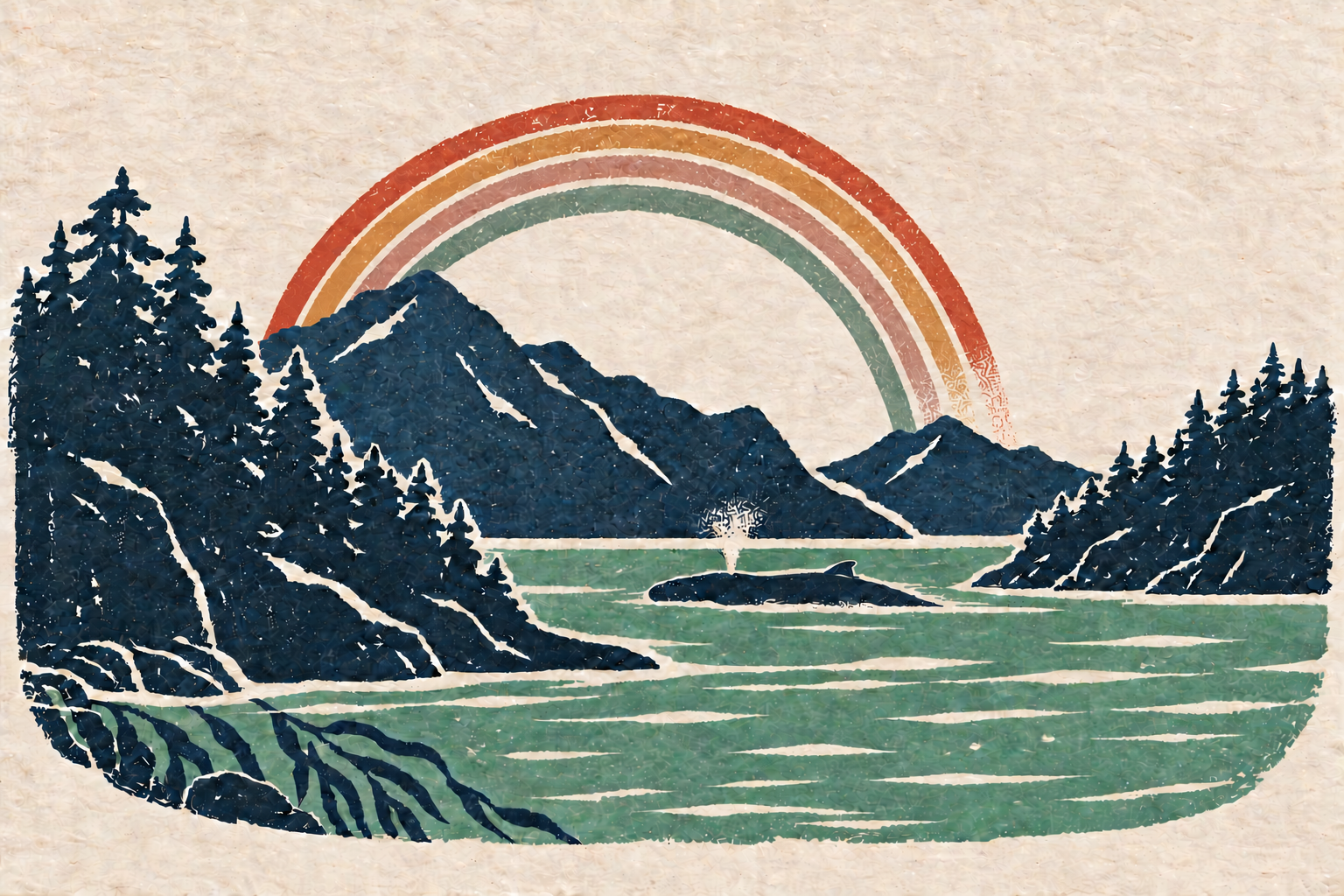
Block-print illustration of a rainbow above coastal mountains, evergreen trees and a surfacing whale
A living place

More than
a beautiful view.

Forested islands. Mountain watersheds. An estuary alive with birds. Beneath the surface, glass sponge reefs create habitat for fish and invertebrates. The Howe Sound’s beauty reaches far beyond what we can see from shore. [1] [5]

Átl’ḵa7tsem / Howe Sound is a place of longstanding relationships, knowledge and stewardship. Squamish Nation and other Coast Salish peoples have made their home here since time immemorial. This story begins long before mining, and continues through Indigenous stewardship today. [2]

“Prayers and love, once they are put down, stay where they are put.”

— Skwetsimeltxw, as recorded by Chris Corrigan (2020)

Corrigan heard these words during the Squamish-led Mi tel’nexw leadership course. His account reflects on generations of love, prayer and stewardship in this territory.

Read Corrigan’s full reflection, Sp’ákw’us: ways of seeing ↗
See the Sound

A place worth knowing.

Watch filmmaker Bob Turner’s A UNESCO Biosphere Region for Átl’ka7tsem / Howe Sound.

Film by Bob Turner · Published September 2021 · Watch on YouTube ↗

Damage, restoration and renewal

Recovery took work.
Care is still needed.

It is hard to imagine this history when we look across the water today. Fraser Basin Council says Britannia Mine was once described as “the largest single point source metal contamination problem in North America.” [6]

The mine’s acidic drainage carried metals into the surrounding water, soil and sediments, devastating marine life in the Howe Sound. Its recovery is a story of sustained effort—and a reminder of what continued care can make possible. [6]

  1. 1974 · Mine closure

    The mining stopped. The drainage did not.

    Britannia Mine closed in 1974, but acid rock drainage continued to carry dissolved metals into the surrounding watershed and the Howe Sound. [3]

  2. 2005–2006 · A turning point

    Treatment changed what entered the water.

    The water treatment plant began operating in late 2005 and officially opened in June 2006. It removes metals and neutralizes acidity before water is discharged into the Howe Sound. [4]

  3. Decades of restoration

    Signs of life returning.

    UNESCO describes the return of whales, dolphins and pink salmon after more than 30 years of restoration across the region. Recovery reflects many efforts and changes, beyond the mine cleanup alone. [1]

  4. 2021 · UNESCO recognition

    A shared commitment to the future.

    On September 15, 2021, Átl’ka7tsem / Howe Sound was announced as Canada’s 19th UNESCO Biosphere Region. [2]

“Active Hope is waking up to the beauty of life on whose behalf we can act.”

— Joanna Macy and Chris Johnstone, Active Hope
Globally recognized. Locally loved.

A UNESCO Biosphere Region.

A place where biodiversity conservation, community life and sustainable development are meant to work together. The designation recognizes ecological and cultural significance and invites ongoing care. [2]

What does this designation mean?

A Biosphere Region is a different UNESCO designation from a World Heritage Site. It is not a park designation or an automatic prohibition on industrial development, and the Biosphere Region organization has no regulatory authority. Learn from the local Biosphere Region society ↗

Why Sound Moms asks questions

What will our children inherit?

We want our children to know a thriving Howe Sound. Its recovery shows what sustained effort can make possible—and why the decisions we make today matter.

Explore Research & Resources →Stay Connected →

Explore the original sources.

  1. UNESCO — Átl’ka7tsem / Howe Sound
    Ecology, regional restoration and biosphere profile.
  2. Canadian Commission for UNESCO — designation announcement, September 15, 2021
    Recognition, Indigenous relationships and the Biosphere Region’s purpose.
  3. Britannia Mine Museum — The Environment
    Acid rock drainage, mine closure and remediation.
  4. Province of B.C. — treatment plant opening, June 5, 2006
    How treatment removes metals and neutralizes acidity. Project backgrounder.
  5. DFO — Howe Sound glass sponge assessment, 2018
    Local habitat, ecological function and monitoring advice.
  6. Fraser Basin Council — Britannia Mine Site Remediation
    Historical metal contamination, collaborative cleanup and returning salmon.